
White Rawhide Bones for Dogs

Anna Platonova
Co-founder Expaw
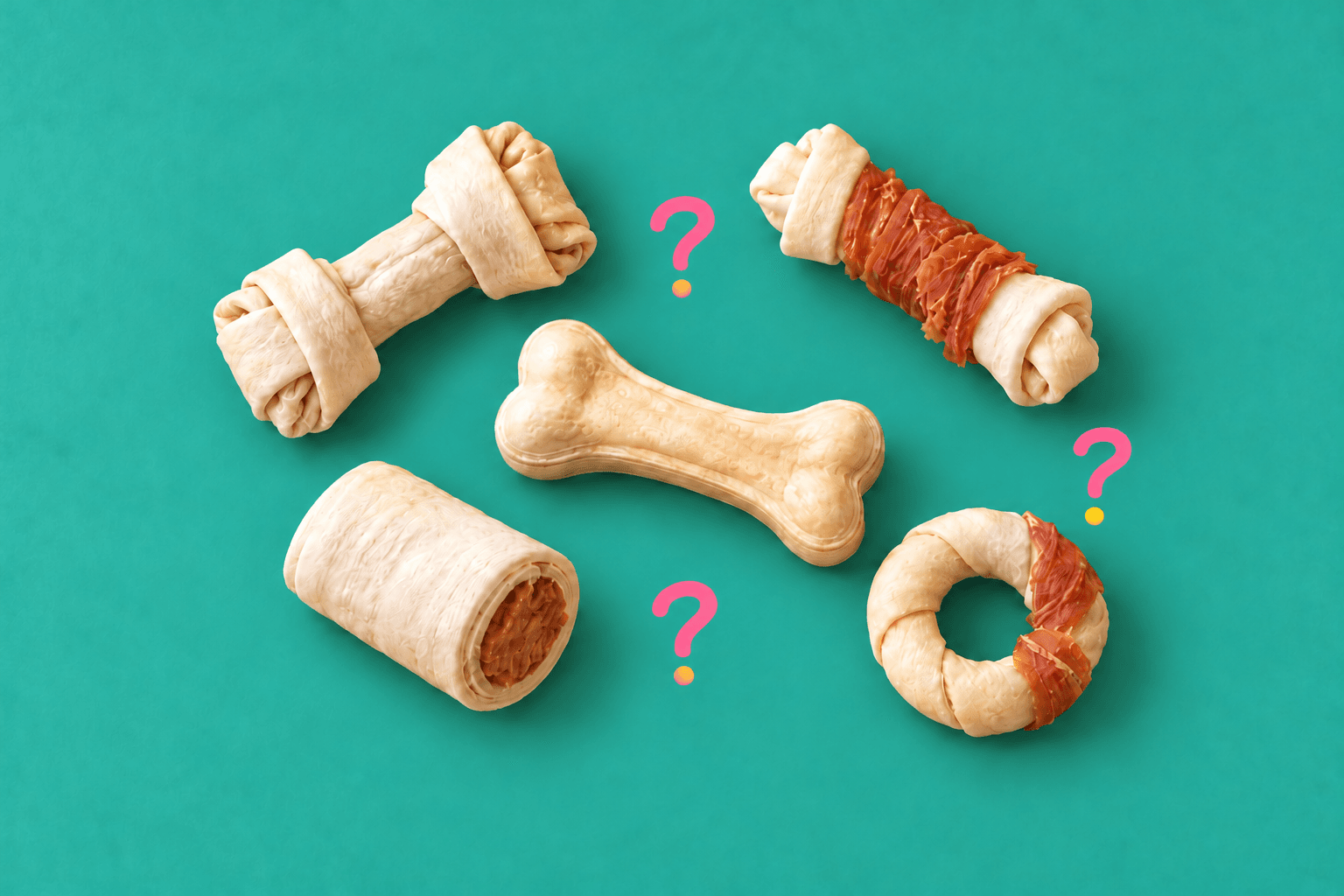
A white knotted bone, sometimes wrapped in a strip of chicken. You’ll find them in plenty of pet shops. The dog gets something to chew for a while, and you get to finish some work or eat dinner in peace. The packaging usually says something about natural ingredients and clean teeth. It looks like a good buy.
But these chews come with risks. A dog can tear off and swallow a large piece that gets stuck in the oesophagus or causes an intestinal blockage. You can’t count on it breaking down quickly, either.
What these bones are made of
These bones are made from rawhide: processed, dried animal skin. It is rolled into sticks, rolls and knotted bones, or compressed into a bone shape.
Some chews contain only hide; others have chicken, duck, starch or glycerine added. The proportions aren’t always listed. But even a detailed ingredient list won’t tell you exactly how quickly a swallowed piece will break down in the stomach.
A “100% natural rawhide” label doesn’t explain how the material was processed or how the finished product was tested. Its white colour won’t tell you how it was treated or whether it contains unwanted substances. That takes testing.
When “long-lasting” becomes a problem
A dog may spend a long time softening the edge of a chew, then tear off and swallow a large piece. The American Society for the Prevention of Cruelty to Animals (ASPCA) warns that large pieces of rawhide can cause choking or gastrointestinal obstruction. It advises owners to consider how their dog chews and to supervise them while they have a treat.
So the size of the bone isn’t the only thing that matters. What does your dog actually do with it: chew away at it gradually, or try to gulp down anything they manage to tear off? If your dog swallows chunks, even a large chew may not be suitable.
Very hard chews can damage teeth. The American Animal Hospital Association (AAHA) includes rawhide among chewing products that can cause tooth fractures. The UK veterinary charity PDSA suggests a simple check: you should be able to make a slight dent in the surface with your fingernail. This helps you judge hardness, but it doesn’t guarantee safety.
But won’t the hide be digested?
Some of it will. The question is how quickly, and how much is still left at that point.
In 2020, researchers at the University of Illinois in the US compared 25 pet treats, including rawhide products. They tested how the treats broke down under the action of digestive enzymes in the laboratory. Samples spent six hours in conditions simulating the stomach, followed by another 18 hours in conditions simulating the small intestine. For a bone-shaped beef-hide chew, about 42% of the dry matter had disappeared after the first stage, and about 77% after the full cycle. Another beef-hide product containing wheat gluten reached about 96% after the full cycle.
This was a small laboratory study, not a feeding trial in live dogs. It cannot tell us how likely a blockage is. But it does show that products in the same category can behave very differently. “It’s edible, so it will dissolve” leaves too much out.
Vets do remove rawhide from dogs’ oesophaguses. A University of Minnesota study reviewed 114 cases of oesophageal foreign bodies from 2004 to 2014; rawhide accounted for 23 of them. A study at a clinic in Brisbane recorded seven rawhide cases among 222 dogs with oesophageal obstruction.
These figures describe dogs that had already been brought to a clinic. They don’t mean that one in five dogs given rawhide will develop a problem: the studies did not count how many dogs ate it without complications.
What’s sold in Georgia and Armenia
Antos and Trixie are commonly sold in Georgia. Antos Raw Hide White with chicken lists chicken, rawhide and glycerine, without giving the proportions. The Trixie Denta Fun range includes bones made from 100% rawhide and rawhide rolls wrapped in duck meat.
In Armenia, you can find Trixie and Pet Interest. Trixie Denta Fun white knotted bones are labelled as 100% rawhide. Pet Interest also lists 100% rawhide for its ON THE GO White Pressed Bones and Rawhide Twisted Sticks.
Skip treats without an ingredient list
If you can’t establish who made a chew, what it contains or when it expires, we suggest leaving it on the shelf. Especially if it is sold loose from an open box and nobody can show you the original packaging. “Everyone buys it, it’s natural” doesn’t give you that information.
Selling treats individually doesn’t automatically mean their origin is unknown. Ask to see the original packaging so you can check the manufacturer, ingredients, expiry date and batch number.
What to give your dog instead
Every dog is different: digestion, dental health and chewing habits all vary. Bully sticks suit some dogs and give others diarrhoea. Even if a dog has chewed bones for years without any obvious problems, that doesn’t guarantee it will always go well.
We don’t consider white rawhide bones a safe choice, but we won’t suggest one replacement for every dog. Treats and activities need to suit your dog, sometimes with advice from your vet. Here are a few options to consider:
- Bully sticks and other natural dried treats, such as pig snouts and ears. Consider their fat content and size, and how your dog chews them: these treats can also cause digestive upset or become lodged if a large piece is swallowed.
- Food-stuffable toys filled with frozen dog pâté or your dog’s usual wet food. Choose a size and strength that suit your dog.
- Dental sticks with an ingredient list you have checked, suitable for your dog’s age and size. Check whether they contain rawhide too: the word “dental” alone won’t tell you.
- Food puzzles and snuffle mats using part of your dog’s usual food allowance, if you simply want to keep them occupied.
Offer a small amount of any new treat first and see how your dog responds. Stay nearby while they chew or explore a new toy.
If your dog has already swallowed a large piece
Contact your vet straight away, even if your dog seems fine for now. Explain what they ate, roughly how big the piece was and when it happened. Keep the packaging or take a photo of it.
Vomiting, loss of appetite, abdominal pain and lethargy need urgent veterinary attention. If your dog is struggling to breathe, get emergency help immediately. Don’t try to make them vomit at home or wait for the piece to “dissolve”. Your vet should decide what to do next.