
Why Do Dogs Eat Grass?

Anna Platonova
Co-founder of Expaw
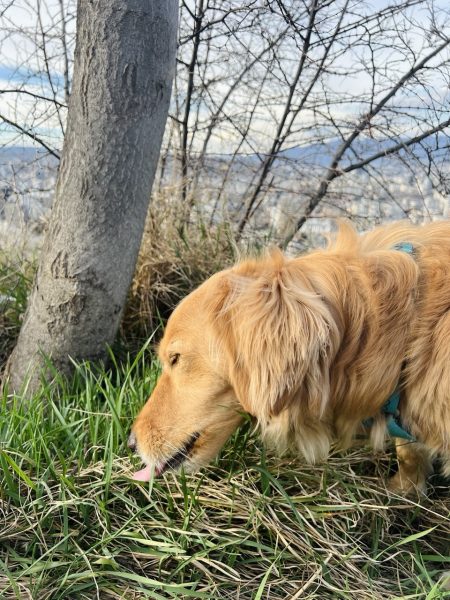
If your dog starts eating grass during a walk, the first thought is often that something is wrong.
But that's not always the case.
Many dogs eat grass regularly and remain completely healthy. What matters isn't that your dog occasionally nibbles on grass, but whether this behavior changes over time.
Why Do Dogs Eat Grass?
Dogs explore the world through smells and tastes. They sniff the ground, leaves, and sometimes chew on things they find outside. In that sense, grass is just another interesting object to investigate.
Some veterinarians associate grass eating with feeding routines. There are observations suggesting that some dogs are more likely to eat grass before meals, possibly because they are hungry.
Others link the behavior to a lack of dietary fiber.
Another possible reason is boredom or insufficient mental and physical stimulation. If a dog isn't getting enough activity — or, conversely, feels overwhelmed by its environment — it may start chewing grass simply as a way to occupy itself.
A common belief is that dogs eat grass to make themselves vomit. This can happen, but it appears to be a less common reason. In many cases, dogs don't seem unwell beforehand and don't vomit afterward.
When It's More Than Just a Habit
Grass eating can sometimes be a sign of an underlying problem.
I experienced this with one of my dogs. He had always nibbled on grass occasionally during walks without any issues. But at some point, he started eating it much more actively and then vomiting bile afterward. We visited a veterinarian and had an ultrasound done. The diagnosis turned out to be gastritis.
The problem wasn't that he ate grass — it was that his behavior had changed.
When Should You Be Concerned?
Occasional grass eating is generally considered normal dog behavior.
However, it's worth paying attention if your dog starts eating grass more often than usual, does it compulsively, or begins vomiting afterward — especially if the vomit contains bile.
Other warning signs include lethargy, loss of appetite, or diarrhea.
⚠️ There can be many possible reasons behind these symptoms. It's best to consult a veterinarian, ideally one with experience in gastroenterology. Lawns may be treated with chemicals, grass can carry parasites, and toxic plants may sometimes be present nearby.
The Bottom Line
Dogs often eat grass, and in most cases, this is completely normal behavior. Both scientific studies and modern veterinary observations support this.
One of the largest studies on the subject (Hart et al., 2008) analyzed data from 1,571 dogs. Researchers found that 68% of dogs regularly ate plants, 91% showed no signs of illness beforehand, and only about 22% vomited afterward.
Since then, few studies of a similar scale have been conducted, largely because grass eating itself is not considered a clinical problem. Modern veterinary sources generally support the same conclusions.
However, if the behavior changes or additional symptoms appear — such as vomiting (especially bile), lethargy, or loss of appetite — it may indicate an underlying gastrointestinal issue. In that case, it's best not to delay a veterinary check-up.