
You Don’t Have to Be a Perfect Dog Owner

Anastasia Antonova
Psychologist, CBT therapist
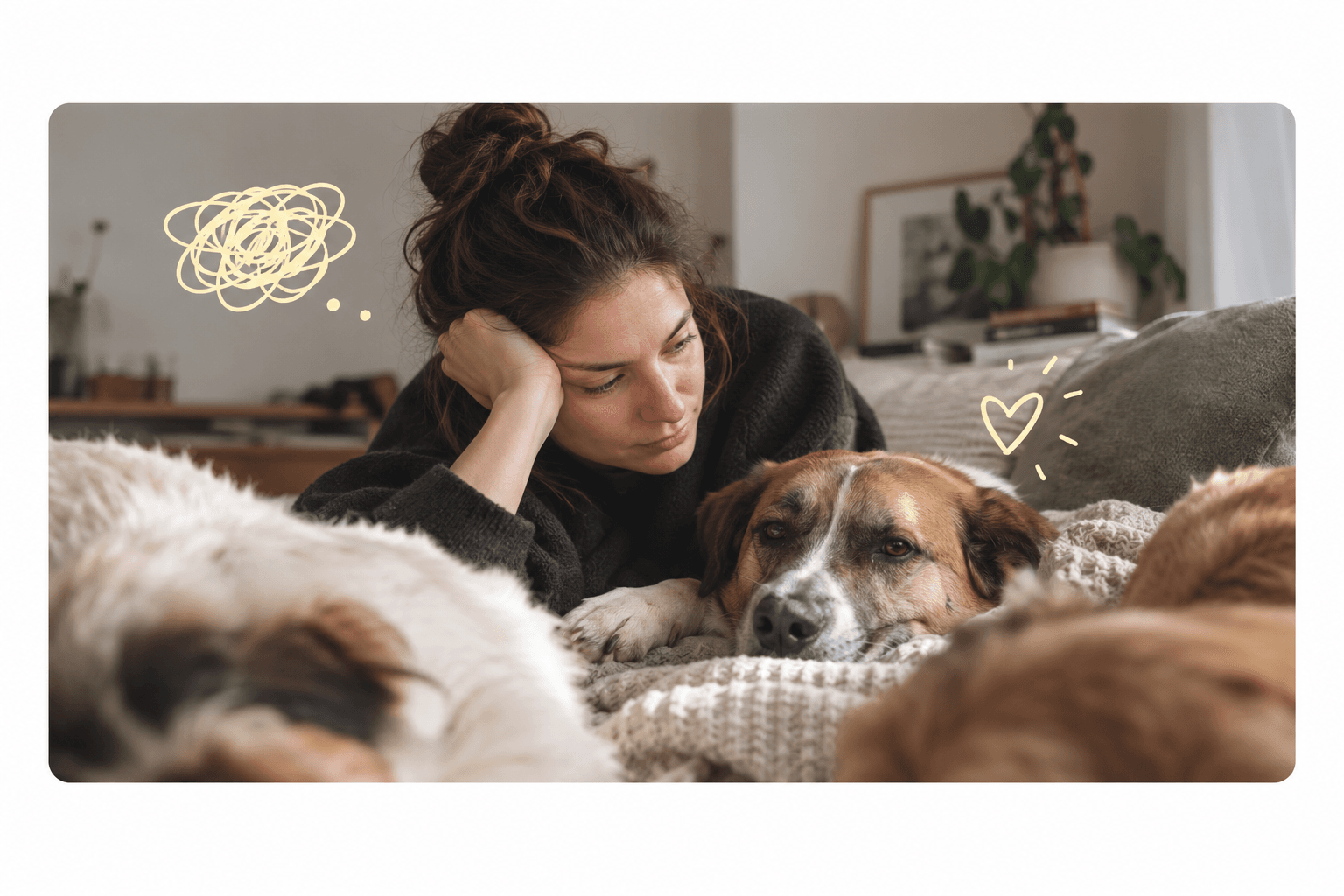
Why dog owners feel guilty
Dogs are living beings. They can feel happy, sad, angry, or stressed, and all of this can affect their behavior.
But we’re living beings too. We have emotions as well, and that’s completely normal. We can’t control when emotions arise, but we can choose how we respond to them.
A dog can bring up all kinds of feelings: joy, exhaustion, guilt, anger, anxiety, despair, excitement. All of them are normal.
Many dog owners sometimes feel guilty toward their dogs or worry that they are “bad owners.” Guilt can lead to exhaustion, overcompensating, or irritation with the dog.
Guilt often appears when our ideas about what we should be doing don’t match reality. And there are endless versions of the “perfect dog owner,” especially on social media: Katya walks her dog for five hours a day, Petya has installed the perfect non-slip flooring, Masha feeds her dog the freshest hypoallergenic rabbit, and Valera takes his dog to a spa three times a week.
And when advice in posts and videos sometimes directly contradicts other advice, it can feel as though guilt is the only possible outcome.
Event, thought, emotion
Cognitive behavioral therapy uses the ABC model. A is the event. B is the thought about the event — the way we interpret it. C is the emotion and the behavior that follows. The same event can lead to very different feelings depending on the thought that comes between the event and the emotion.
For example, you come home and your dog runs out to greet you. You might think, “I missed her too,” and feel happy. Or you might think, “She wants my attention again, and I already can’t cope with anything,” and feel irritated or guilty. The event is the same, but the thoughts about it are different.
Noticing these thoughts isn’t easy. They often appear automatically — so quickly that we may feel the emotion before we even realize what we were thinking.
Where does the idea of a perfect dog owner come from?
Our ideas about the “perfect dog owner” are often shaped by other people’s advice and examples. On social media, it’s easy to come across conflicting recommendations: some people insist on long walks, others on training sessions, a raw or home-prepared diet, or regular trips out of the city. Together, all of this can create the impression that a good owner is supposed to do everything.
But every dog has different needs depending on their age, health, temperament, and lifestyle. Someone else’s checklist of what an owner “must” do can’t be a measure of how well you care for your dog. If you have questions about your dog’s health, care, or behavior, it’s better to discuss them with a veterinarian or dog trainer.
Exercise: What kind of dog owner am I?
Think about what being a terrible, normal, good, or ideal dog owner means to you.
Divide a sheet of paper into four columns:
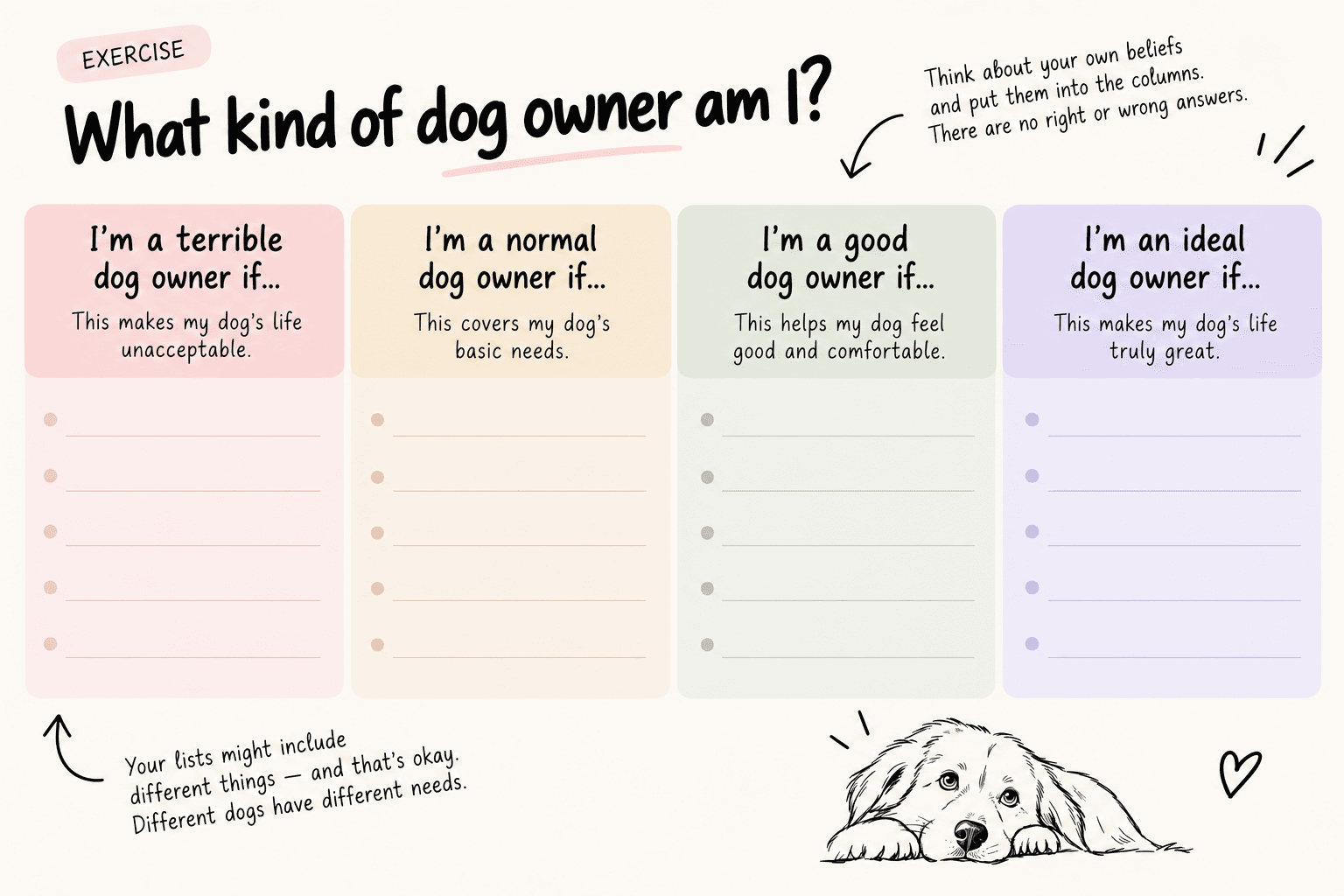
You can include as many points as you like, and everyone’s list will be different — because different dogs need different things.
When the thought “I’m a bad dog owner” comes up, return to your list and see how many things you actually do, and which columns they belong to.
You don’t have to be perfect
Feeling guilty, irritated, tired, or thinking “I’m a bad dog owner” doesn’t by itself tell you how well you care for your dog. Emotions arise, and we can’t always control them. But we can choose what we do next.
If it feels like you’re not doing enough, return to the list from the exercise. Is there a real problem that needs to be addressed, or are you comparing yourself with your own image of the perfect dog owner again?
Being a normal dog owner is already enough.